





The whining and groaning stopped by the evening.
They finally retired to the gloomy makeshift tents not far from the invasive floodwaters on a piece of ever-receding dry land.
The drenched night ominously loitered over the dry land on the southern side of Charmahatpur. The ever-growing darkness strangled the little light of the lantern or the clay lamp trickling out of the openings in tents made of tarpaulin and jute sacks.
Floodwater from the womb-deep fissure of the Dhanshali River gushed out like a stout viper, fuming and indignantly striking the land that remained dry. The river itself enthusiastically encouraged the floodwaters, “shabash! shabash!” There was a huge bamboo bush between the floodwaters and the villainous river. Now submerged under the bruising water, the bamboo bush quivereed in watery pain. Glowworms, like sparks of fire, fell down the bush and scattered across the extended body of the floodwater in the confused darkness of the night.
Sojne, Sajad Shekh’s daughter, came out of her family’s tent and went to the back. Somebody was silently waiting for her in the dark there. When Sojne arrived, the shadowy figure said in a trembling voice, “Did you fall asleep?”
“Yes. I waited a long time for you and then fell asleep. Tell me Malati, are you sure about all this? Do you realise that we are going to be ruined!” Sojne whispered.
Malati remained silent for a moment. She thought of something and then replied impatiently, “You want to survive, right? Then don’t think too much.”
Her empty stomach was recoiling. She had only eaten her share of a bowl of boiled wheat that morning. She’d emptied it in a minute and drunk water up to her neck to keep herself full. But she was starving now. The fleshy umbilicus was boiling in hunger and sapped on her abdomen. Sojne put her hand inside her frock and held her abdomen to calm it down, “Ma says that it is foroj to save one’s life. But my mother herself is groaning now and mumbles erratically, ‘Give me some rice. I am ready to die, but let me have a bowl of rice first!’”
“You expect food during this deluge! It will kill everybody. Do you understand! It will even kill me!” The thought of her own death distressed Sojne. She felt as if a huge and blunt boulder pressed down on her distressed heart. And the pressure of that deadly boulder moved from her abdomen towards her neck crushing her flesh and bones. She felt as if an enormous leech with an insatiable hunger had invaded her abdomen. It greedily sucked her lifeblood and desperately tried to reach her ribs. Sojne tried to collect herself and mumbled, “Don’t take exception to my decision Khuda. Do you even bother to take note of why the body sins!”
“Are you coming with me? I will proceed alone otherwise.” Malati’s desperation helped Sojne make up her mind. She held her abdomen, rubbed it softly and said, “Yes, I have to go. I will go. But let my father fall asleep first.”
Sojne entered their tent. The inside felt claustrophobic with the sultry smell of sporadic vomiting. The earthen lamp wobblingly emitted little light. A few people, in hardly any clothing, lay on the wet blanket in queues. They cried throughout the day, “Give some rice. I am starving! Give me something to eat.” Finally, they resigned themselves to sleep. Just beside them, Sajad Shekh lay unconscious having vomited a few minutes back. Sojne’s mother sat beside him wearing a veil, and poured water on Shekh’s head. He was burning with high fever.
Sojne passed the people sleeping on the wet blanket and came to the wooden box on the western side of the tent. There was medicine in a bell water-pot on the box. Sojne had taken it from the doctors who came for relief work during the day. Sojne gave the medicine to her mother saying, “Give this to father.”
“Oi, where did you get the medicine from, oi magi?”
“That’s none of your business. Why don’t you just give it to father?”
The noise bothered Sajad Shekh. He asked his wife to be silent. Sojne sat beside him. Shekh asked, “Soi, Kanu and others went to the town. Did they bring any rice or pulses?”
“No.”
“Why?”
“They said they will give rice and pulses in a few days.”
“When?”
“I already said, in a few days.”
“O Khuda! Where are you….! He will die like this!” Sojne’s mother lamented. Shekh vomited again. His whole body flinched. His intestine was about to come out of his nose and mouth. He vomited only black bile this time which looked like blood when a little light fell on it. Sojne’s mother started crying loudly on seeing this. Sojne gave the medicine to her mother and came out of the tent. There, the musty dark lay vanquished amid the shrubs and bushes, like a feeble, dying man. The strong wind blasted the wild palm trees, struck the ground and then went to the floodwaters to wash its body. But the usurious night was indifferently lost in its darkness.
Sojne sobbed as she walked.
She saw the loose tents barely managing to stay upright like houses made with playthings by children. Her father had vomited again in front of her. Only black bile that time. She could see that her father was slowly fading away. She wiped her tears with the back of her hand. She looked around to see the heavy and relentless dark night rolling over the dark water and the tents.
Malati’s tent was at a bit of a distance. Her mother was still crying as she stood outside the tent with a lantern in her hand. A few days back, Malati’s father Satinath Master had died under the wall that fell on him. Her mother still cries and blames her fate for that!
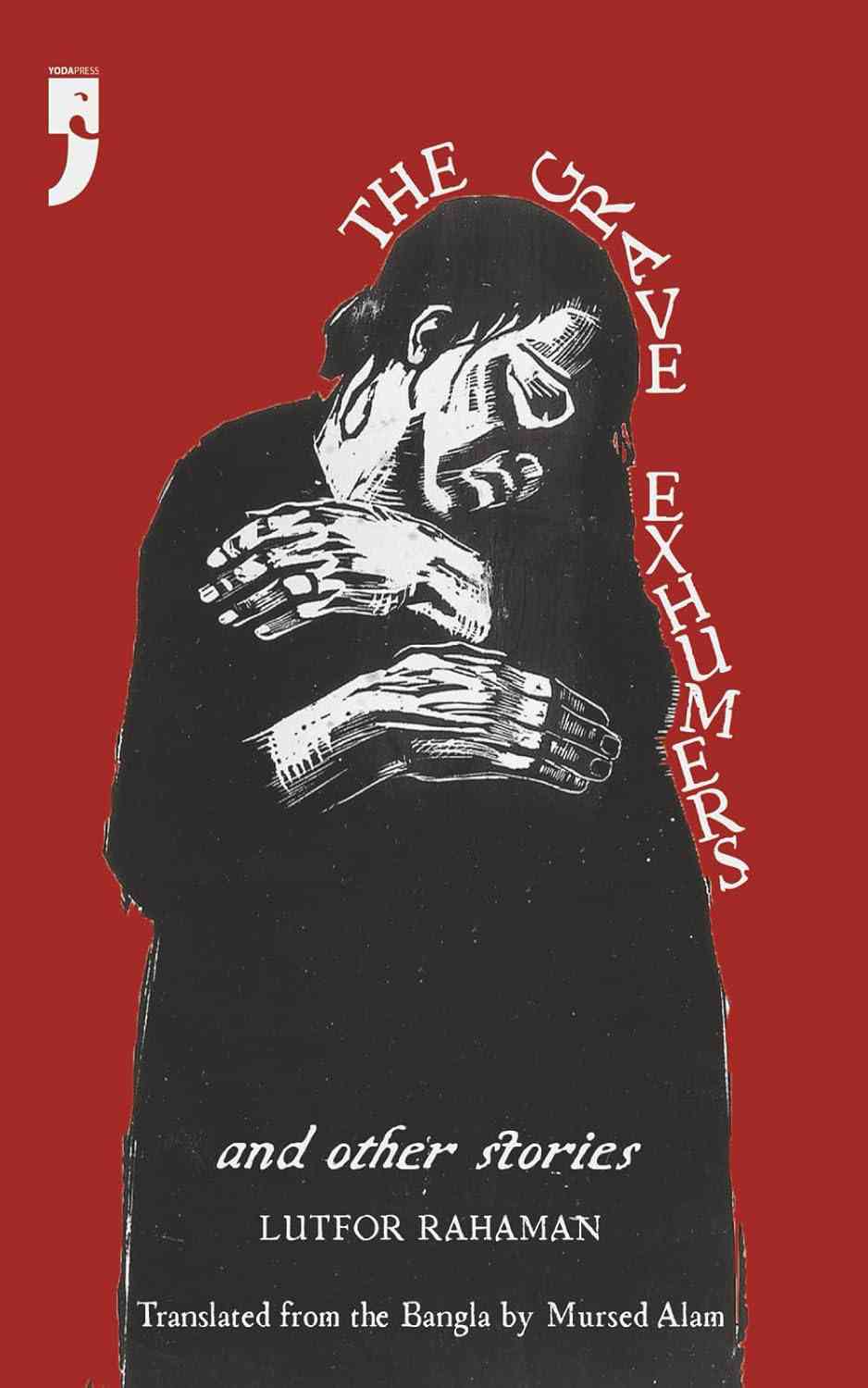
Excerpted with permission from ‘The Grave’ in The Grave Exhumers and Other Stories, Lutfor Rahaman, translated from the Bengali by Mursed Alam, Yoda Press.
